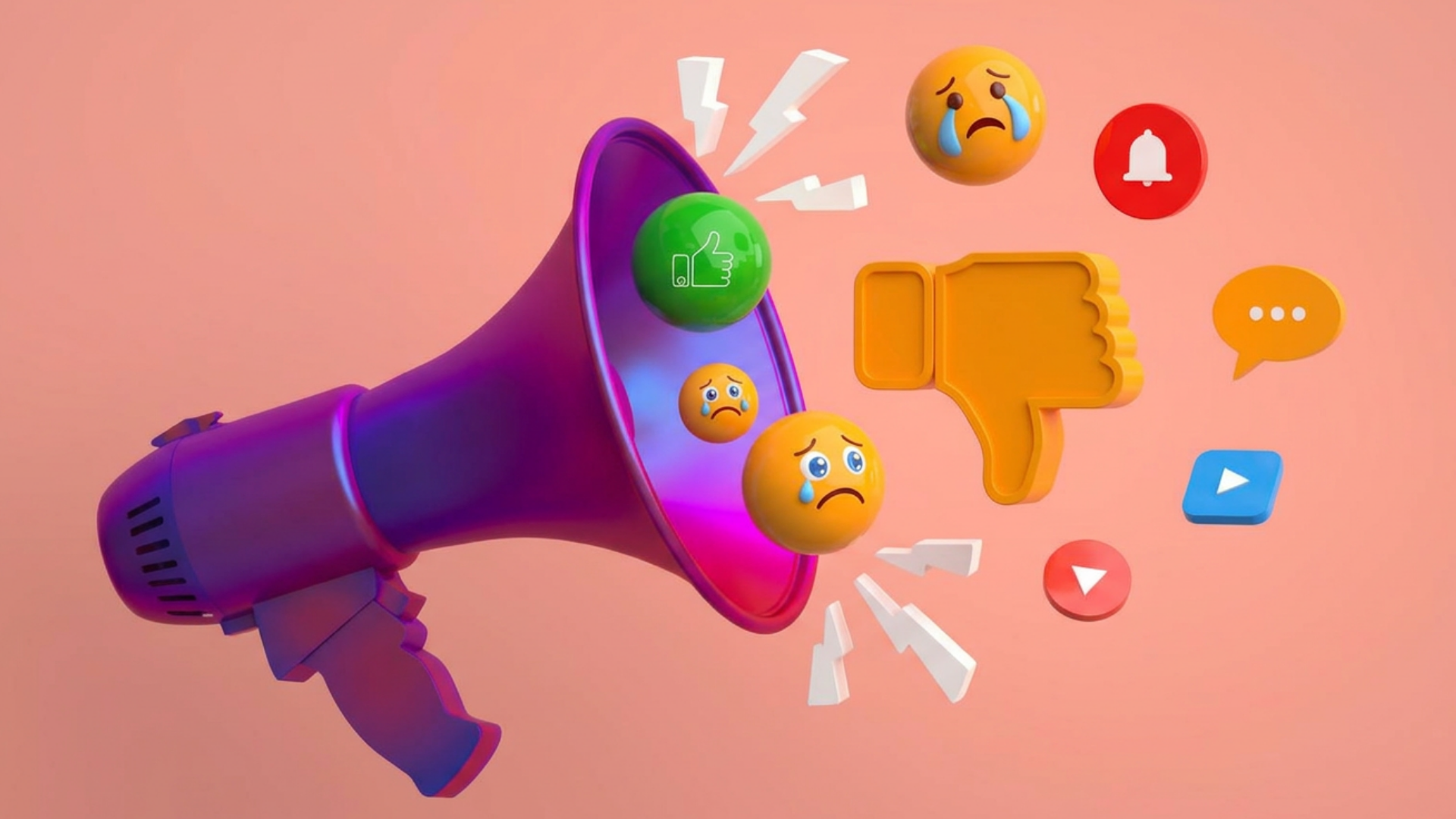
Illustration of a megaphone with reaction icons, sad faces, and social media symbols representing online feedback pressure.

Better Media for Kids: Why Children Don’t Need Safer Social Media

There is a growing wave of attention around “safe social media for kids.” But at Cricket Media, we believe the better question is not how to make social media safer for children. The better question is how to build BETTER MEDIA FOR KIDS in the first place.

The pitch usually sounds reasonable: social media is not going away, kids are already online, and younger audiences deserve a version with stronger moderation, better privacy protections, and more age-appropriate content.

Those protections matter. Privacy matters. Moderation matters. Age-appropriate standards matter.

But as a kids’ media company, we think the industry needs to ask a harder question!

Why are we trying to build social media for children in the first place?

A moderated social feed is still a social feed.

And many of the concerns parents have about social media are not only about harmful content, strangers, or data privacy. They are about the behaviors these platforms normalize: performing for attention, chasing reactions, imitating creators, comparing oneself to others, and experiencing creativity through audience feedback.

That is not solved simply by making the feed “safer.”

Close-up of a preteen girl using a smartphone with glowing communication and social app icons.

Better Media for Kids Starts with Healthy Design

When companies talk about safe social platforms for children, the conversation often focuses on privacy, compliance, and moderation.

Those are baseline requirements. Any product built for children should protect personal information, follow children’s privacy standards like the Children’s Online Privacy Protection Act, limit inappropriate contact, carefully moderate content, and give parents meaningful controls.

But privacy and moderation are not the whole issue.

A product can be compliant, moderated, and relatively safer than mainstream social media while still training children in the habits of social media. Privacy protection is not the same as healthy design

That distinction matters.

  • Privacy protection asks: Is my child’s data protected?
  • Content moderation asks: Is my child being exposed to obviously inappropriate material?
  • Developmental design asks: What is this product teaching my child to do every day?

That third question is the one the industry too often avoids.

Healthy Media for Kids Is Not Built Around Performance

Making those mechanics more moderated does not make them developmentally ideal for children.

A child-safe version of a social feed may be safer than TikTok or Instagram. But “better than TikTok” is not the standard parents should have to settle for.

Tools like the American Academy of Pediatrics’ Family Media Plan can help parents think through not just how much screen time kids get, but what kinds of digital habits they are practicing.

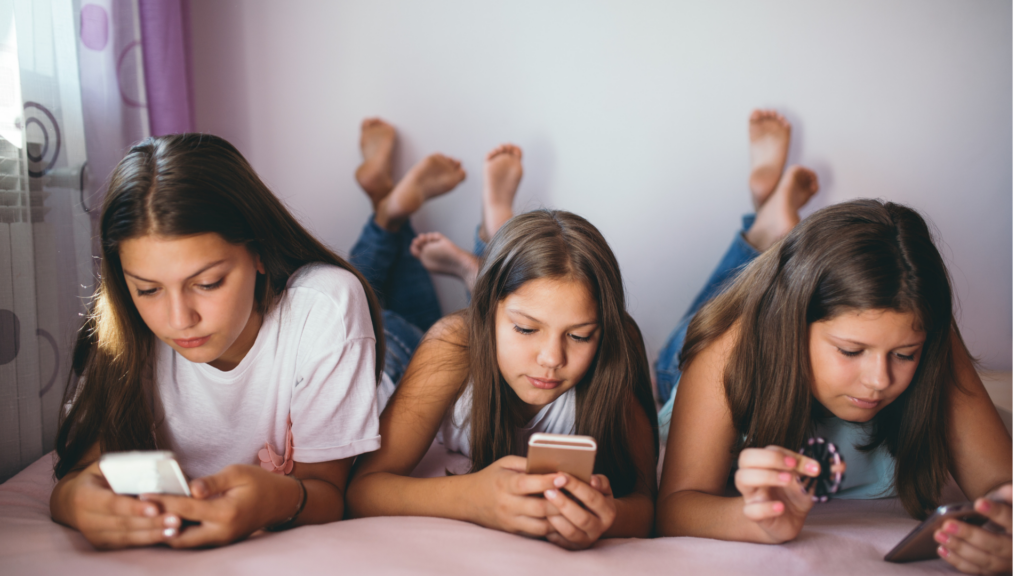
Group of preteen girls lying on a bed and scrolling on smartphones.

For parents, the concern is not only whether a platform filters out bad content. The problem is the behavior, not just the content

The concern is whether the platform teaches children to:

  • perform for attention
  • monitor reactions
  • imitate influencers and creators
  • build identity around audience feedback
  • scroll through endless content
  • participate in trends
  • compare themselves to other children
  • treat visibility as the reward for creativity

These are not side effects of social media. They are core mechanics of social media.

Better Media for Kids Gives Children Room to Create Without Pressure

Children should absolutely have digital spaces that support creativity, imagination, self-expression, and participation. Kids need spaces for creativity without performance pressure.

Creativity does not have to mean posting.

Participation does not have to mean performing.

Discovery does not have to mean scrolling.

And self-expression does not have to be tied to public reaction.

The best kids’ media experiences should help children explore who they are and how the world works without pushing them into the psychology of social media before they are ready.

That means building around:

  • storytelling
  • reading
  • listening
  • imaginative play
  • guided creativity
  • curiosity-driven discovery
  • age-appropriate video
  • trusted characters and ideas
  • closed-library exploration
  • creation without constant audience feedback
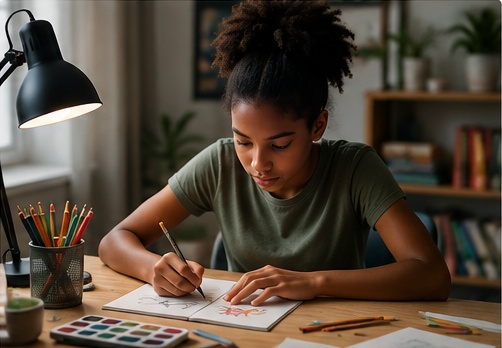
Preteen girl drawing at a desk with art supplies, focused on creative work without a phone or social media audience.

That is a fundamentally different model from a moderated social feed.

How Cricket Media Builds Better Media for Kids

At Cricket Media, we are focused on building a modern kids’ media ecosystem rooted in trust, curiosity, and purposeful discovery.

That includes magazines, stories, nonfiction, streaming video, audio, and interactive experiences designed to help children explore ideas safely and meaningfully.

Our goal is not to create a social platform for children.

Our goal is to create media experiences that respect childhood.

That means giving children access to rich stories, thoughtful content, creative prompts, trusted characters, science, history, art, music, and age-appropriate discovery without asking them to perform for an audience.

It means building products that encourage curiosity rather than comparison.

It means treating kids as readers, thinkers, makers, listeners, and explorers — not miniature influencers.


The Future Should Be Better Media, Not Safer Social Feeds

The next generation of kids’ media should not simply be a safer version of adult social media.

It should be something better.

Something quieter when it needs to be quiet. More thoughtful. More imaginative. More developmentally aware. Less dependent on feeds, reactions, trends, and performance loops.

The American Academy of Pediatrics has long emphasized that media use can bring both benefits and risks for children, which is why the quality, context, and design of media experiences matter.

Parents are right to ask whether a platform is private, moderated, and compliant. But they should also ask:

What habits is this product building in my child?

Because children do not need a better way to practice social media behavior.

They need better media for kids.