To prepare your child for the first day of school, talk through what they can expect, practice the morning routine, organize supplies together, create a calm first-day plan, and leave time to reconnect afterward.
Back to school can be exciting and at the same time kids can be apprehensive. These practical steps can reduce uncertainty and help children begin the year feeling supported and confident.
Talk About the First Day of School in Advance
Children often feel more comfortable when they know what to expect. In the days leading up to school, talk through what the morning may look like, how they will get there, where they will go when they arrive, and what may happen during the day.
Keep the conversation appropriate for your child’s age. Younger children may benefit from walking through the schedule step by step, while older children may want to discuss teachers, classmates, changing classrooms, or increased workloads.
Try asking:
- What are you most excited about?
- Is there anything you are wondering about?
- Is anything making you feel nervous?
- What would help the first day feel easier?
Listen without immediately trying to solve every concern. Sometimes children simply need reassurance that their feelings are normal and a safe space to talk about them. The Child Mind Institute also recommends listening seriously, validating children’s concerns, and helping them plan for specific worries rather than dismissing their feelings.
Reading a story together about school, friendship, trying something new, or managing big feelings can also help begin the conversation. Families can start with these free stories for the first day of school. Cricket Media stories can give families a comfortable starting point for discussing experiences that may otherwise be difficult to put into words.

Build Familiarity Before the First Day of School
Uncertainty can make a new situation feel more difficult. Help your child become familiar with as much of the school-day routine as possible.
You might:
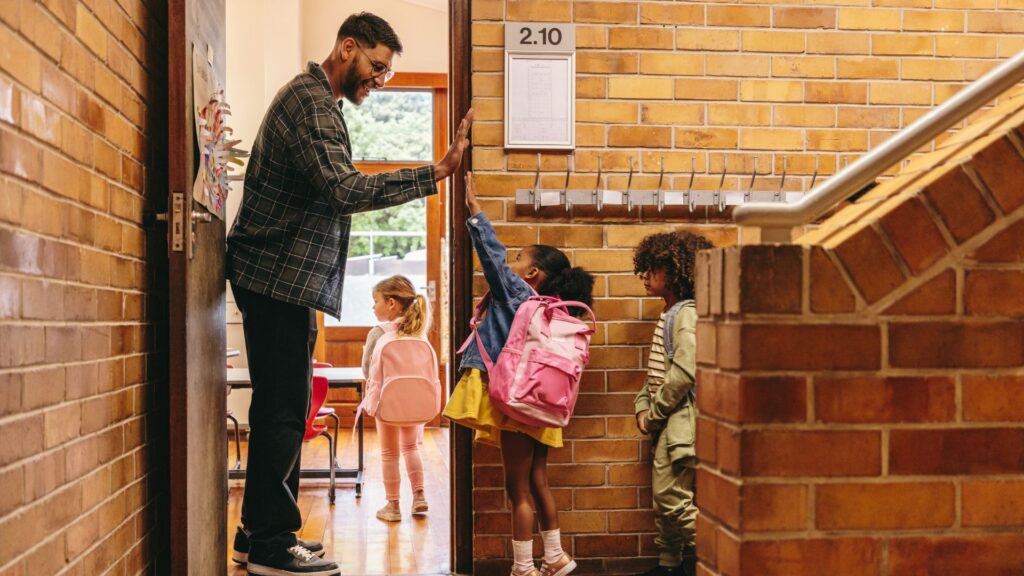
- Visit the school
- Walk or drive the school route
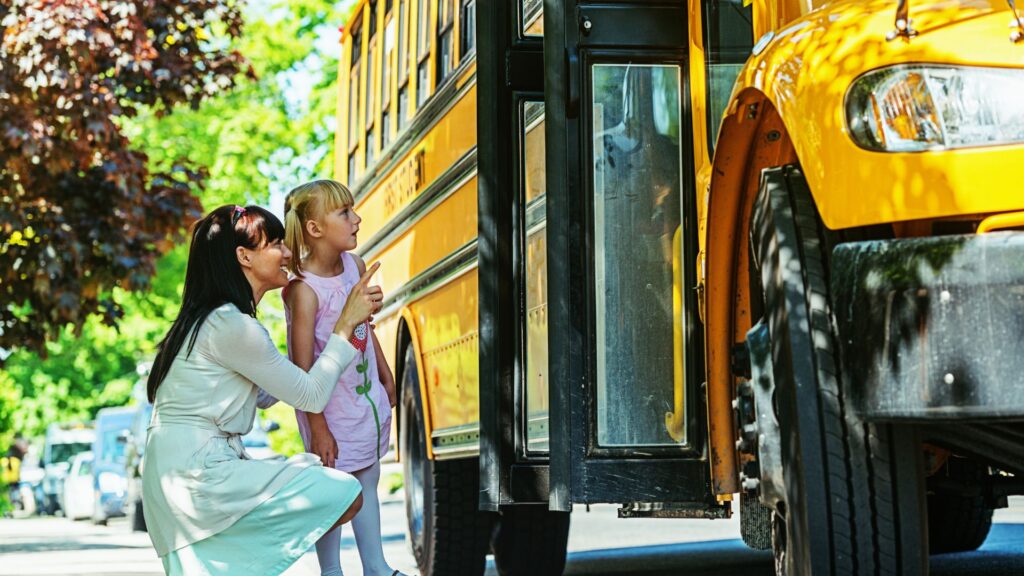
- Locate the bus stop
- If a new school, visit the school website
- Discuss where school supplies belong
- Explain the drop-off and pickup plan
If your child is attending a new school, looking at photographs of the building or reviewing a map together may help the environment feel less unfamiliar.
Practice the School Morning Routine
Practicing the routine several days in advance can help you prepare your child for the first day of school while identifying small problems before they create stress. Gradually returning to a consistent bedtime can help, too, since adequate sleep supports students’ focus, concentration, health, and academic performance.Â
Wake up at the school-year time, get dressed, eat breakfast, pack the backpack, and try to leave the house on schedule.
Prepare as much as possible the night before:
- Set out clothes
- Pack school supplies
- Prepare lunch
- Fill the water bottle
- Confirm transportation
- Place shoes and the backpack near the door
For more ideas, see our guide to creating a back-to-school routine for kids.
Let Your Child Help Prepare for the First Day of School
Invite your child to choose or organize school supplies, select a first-day outfit, pack their backpack, or help plan breakfast and lunch.
Giving children ownership over manageable decisions can help the first day feel like something they are participating in rather than something simply happening to them.
Create a Calm and Encouraging First Morning
A meaningful first-day tradition can make the morning feel special without creating additional stress.
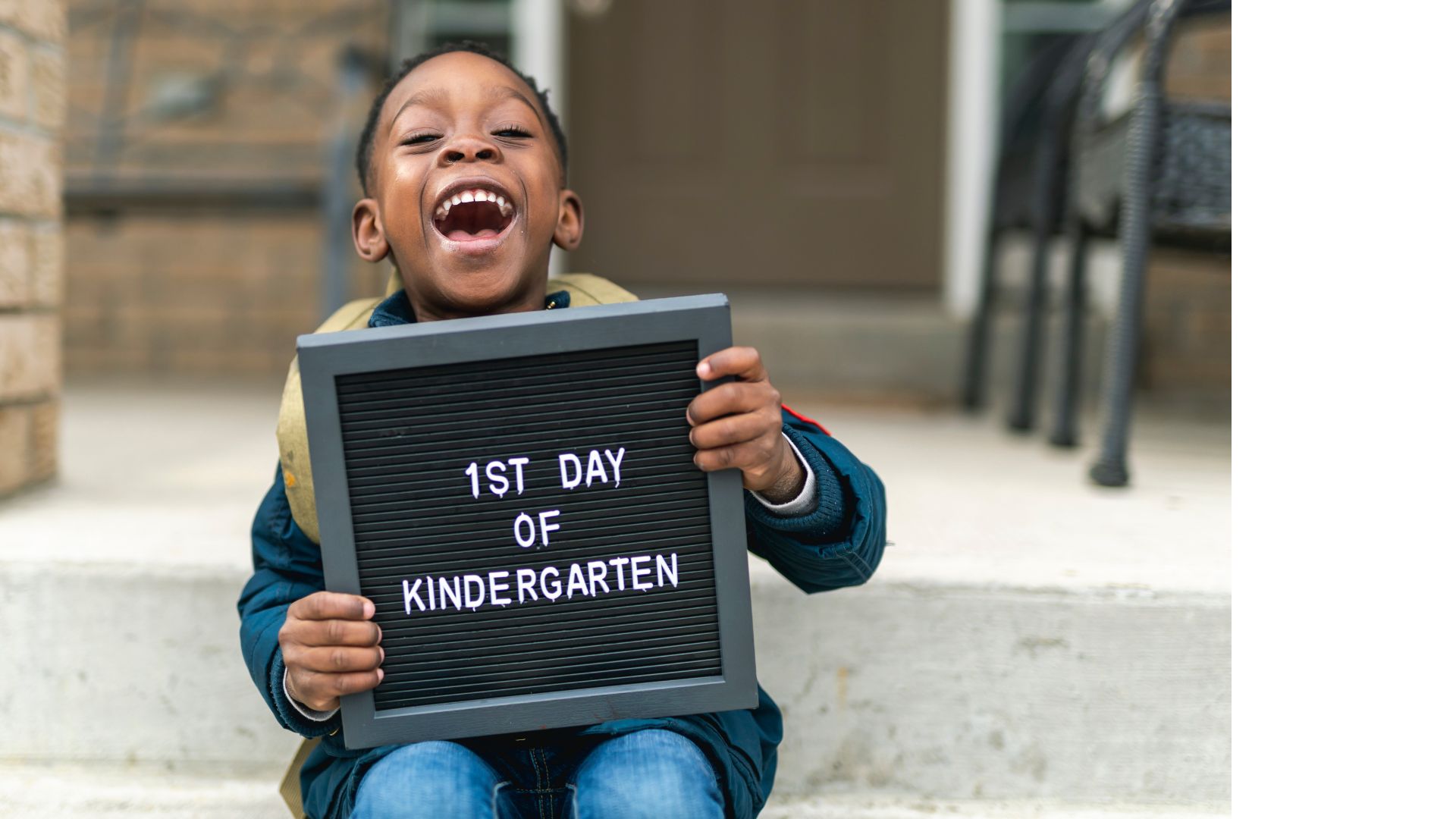
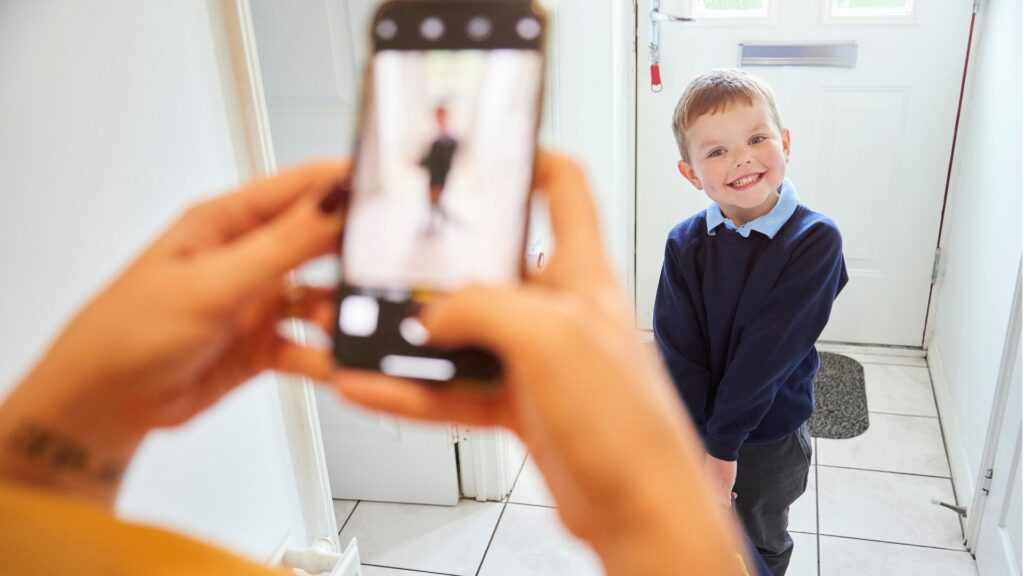
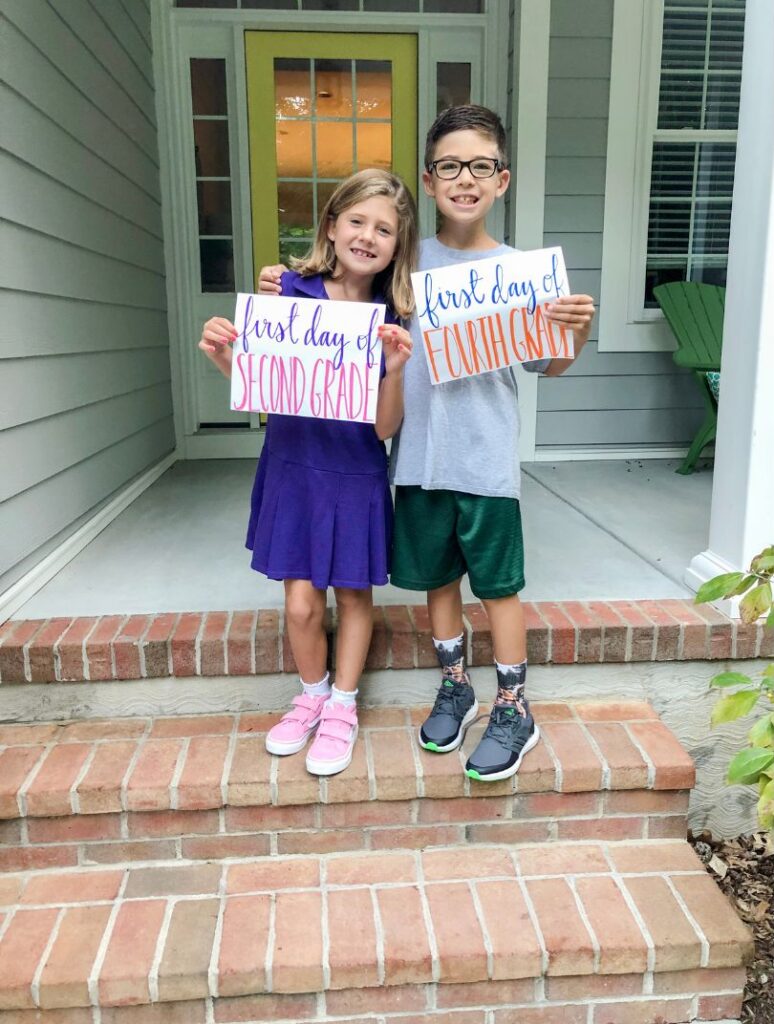
Some families serve a favorite breakfast, decorate the table, or take an annual photograph with a sign showing the child’s grade and school year.
The tradition does not need to be elaborate. Its value comes from giving children something positive and familiar to anticipate.
You might also:
- Begin a countdown several days before school
- Write an encouraging sidewalk-chalk message
- Attach a small charm to their backpack
- Place a joke or note in their lunchbox
Consider your child’s personality. A public message may delight one child and embarrass another. Choose a gesture that feels supportive to them
Plan for the First Afternoon Back Home
Preparing your child for the first day of school also means thinking about what happens when the day ends.
Children may come home excited, exhausted, quiet, emotional, or a combination of emotions. Give them time for a snack, movement, quiet play, reading, or rest before expecting a detailed report. The American Academy of Pediatrics notes that healthy after-school routines can include a snack, exercise, relaxation, and study in whatever order works best for your child.
Instead of asking only, “How was school?” try:
- What made you smile today?
- What surprised you?
- Who did you spend time with?
- What felt easy?
- What felt difficult?
- What are you looking forward to tomorrow?
Some children will want to tell you everything immediately. Others may begin sharing later at mealtime or while getting ready for bed.
Focus on Connection Rather Than a Perfect First Day
Even with careful preparation and the day may not go exactly as planned. Your child may forget something, feel nervous, or need more time to adjust.
What matters most is that children know they have support at home. Reassure them that it is normal for a new school year to take time to feel familiar.
By talking openly, practicing routines, involving them in preparation, and creating a few meaningful traditions, families can make the first day feel more manageable and positive.
Final Thoughts
The start of school does not have to mean the end of relaxed, interest-led learning.
Cricket Media Magazines offer children age-appropriate stories, nonfiction, poetry, puzzles, art, and activities to enjoy throughout the school year. Families can choose from titles created for every stage of childhood—from BABYBUG® for infants and toddlers to CRICKET® for curious readers ages 9 to 12.
Frequently Asked Questions About how to prepare your child for the first day of school
How can I prepare my child emotionally for the first day of school?
Talk honestly about what to expect, ask about their concerns, validate their feelings, and practice parts of the routine that may feel unfamiliar.
How can I calm my child’s first-day-of-school anxiety?
Explain the day in simple steps, maintain a calm morning routine, and give your child a small reminder of home, such as a lunchbox note or backpack charm.
What should parents do the night before school starts?
Set out clothes, pack supplies and lunch, confirm transportation, and keep the evening calm and predictable.
What should I ask my child after the first day of school?
Ask specific, open-ended questions about what made them smile, what surprised them, what felt difficult, and what they are looking forward to tomorrow.