Raising Curious Minds

Helping families raise readers, thinkers, and lifelong learners.

Young girl interviewing her grandmother at a Thanksgiving family gathering

Capture a Family Memory This Thanksgiving

Some of the best family stories aren’t written down. They’re shared around the dinner table, told between bites of pie, or remembered when someone says, “Did I ever tell you about the time…?”

This Thanksgiving, make time to capture a few of those stories.

All it takes is a curious kid, someone with a story to share, and a few good questions. You might discover something surprising about your family’s past, share a good laugh, or preserve a memory you’ll treasure for years to come.


All it takes is a curious kid, someone with a story to share, and a few good questions. You might discover something surprising about your family’s past, share a good laugh, or preserve a memory you’ll treasure for years to come.
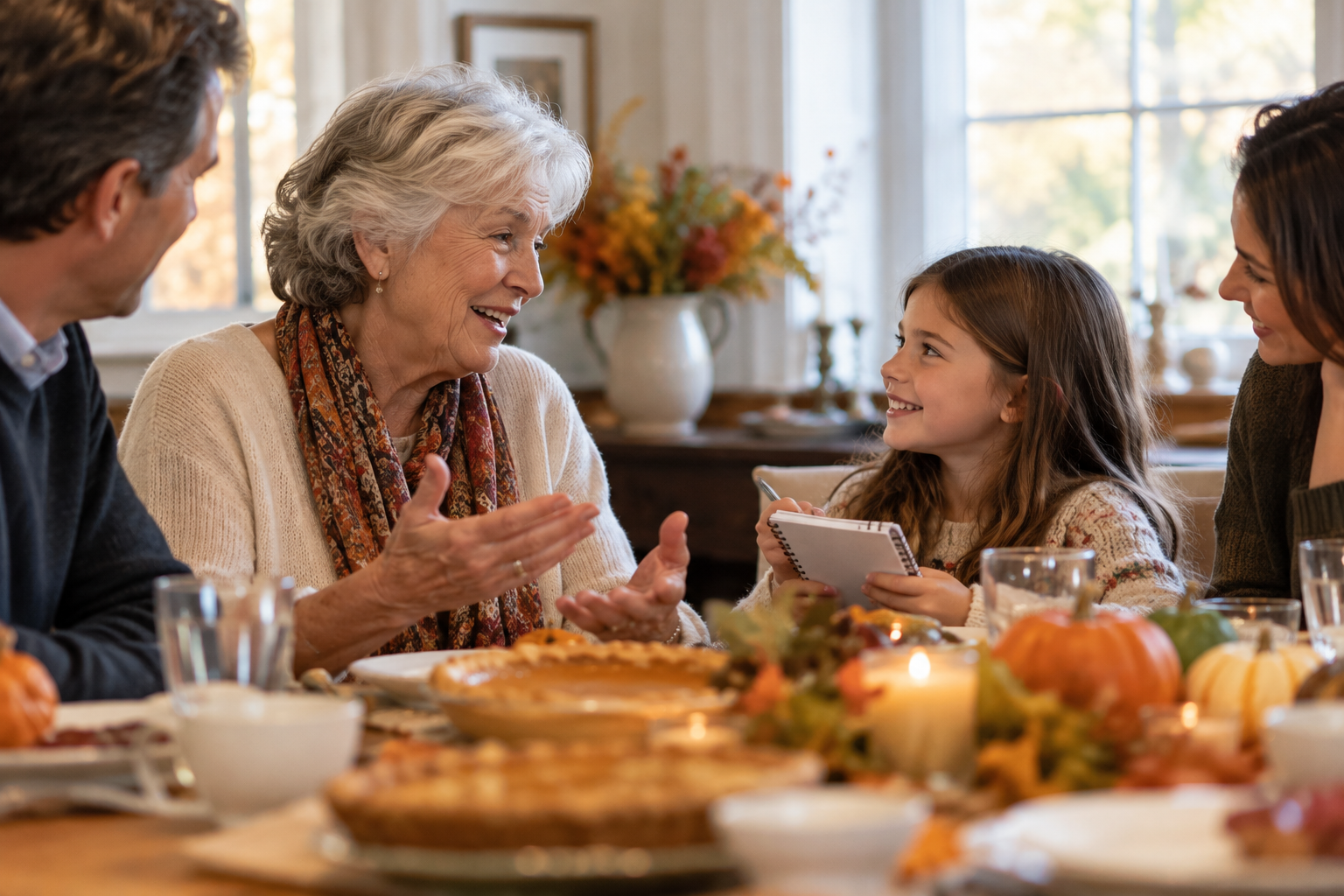
Every family has a story worth sharing

Kids love hearing what life was like before they were born. What did Grandma do for fun? What was Thanksgiving like when Grandpa was little? Did anyone have a family tradition that doesn’t exist anymore?

These conversations help kids connect with people they love and see family members in a whole new way. For more ideas on nurturing those connections, see our article on building strong grandparent-grandchild relationships.

And the best part? You don’t need to plan an elaborate activity. Just start talking.

5 TIPS FOR CAPTURING FAMILY STORIES

1. Choose your storyteller

Invite a grandparent, older relative, or family friend to share a memory. It doesn’t have to be someone at your Thanksgiving table. A phone or video call works, too.

2. Start with a simple question.

Try asking:

  • What was Thanksgiving like when you were my age?
  • What’s the funniest thing that ever happened at a family gathering?
  • What games did you love playing as a kid?
  • Is there a family tradition you wish we still had?
  • What’s one memory that always makes you smile?

3. Let kids lead the conversation.

Encourage kids to ask follow-up questions such as “What happened next?” or “Tell me more!” There’s no need to rush through a list. Sometimes one question leads to the best story of all.

4. Capture the moment.

With everyone’s permission, record the conversation on your phone, jot down a few favorite details, or take a picture together. Save the recording or notes somewhere easy to find, with the storyteller’s name and date.

5. Make it a family tradition.

Choose a different storyteller each year, or ask the same questions and see how the answers change. Before long, you’ll have a collection of family memories to revisit and share.

For more question ideas, explore the Smithsonian’s family oral-history interview questions.

Make it fun for every age

Little ones (ages 0–3): Look at family photos together and name the people you see.

Preschoolers (ages 3–6): Ask one or two questions and draw a picture of a favorite story.

Elementary-age kids (ages 6–9): Play family reporter and write down the funniest or most surprising answers.

Tweens and teens (ages 9–14): Lead the interview, record the conversation, and help create a family memory archive.

Download the CRICKET MEDIA Family Interview Guide

We’ve made it easy to get started with a printable Family Interview Guide, featuring conversation starters and space to preserve the stories you discover.

Cover of Cricket Media's Stories Bring Us Together Interview Guide, featuring an orange speech bubble

Turn your Thanksgiving conversations into memories worth keeping with our printable Stories Bring Us Together Interview Guide. You’ll find questions to spark family stories and space to record the moments you want to remember.

Print it before Thanksgiving, bring it to the table, and see where the conversation takes you.

Because sometimes the most memorable part of a holiday isn’t what was on the table. It’s the stories shared around it.