Let’s be honest: most teachers did not sign up to become part-time AI ethicists.
They signed up to teach kids how to read, write, think, ask questions, and make sense of the world.
Now, the need for AI Literacy for Students has arrived in the classroom.
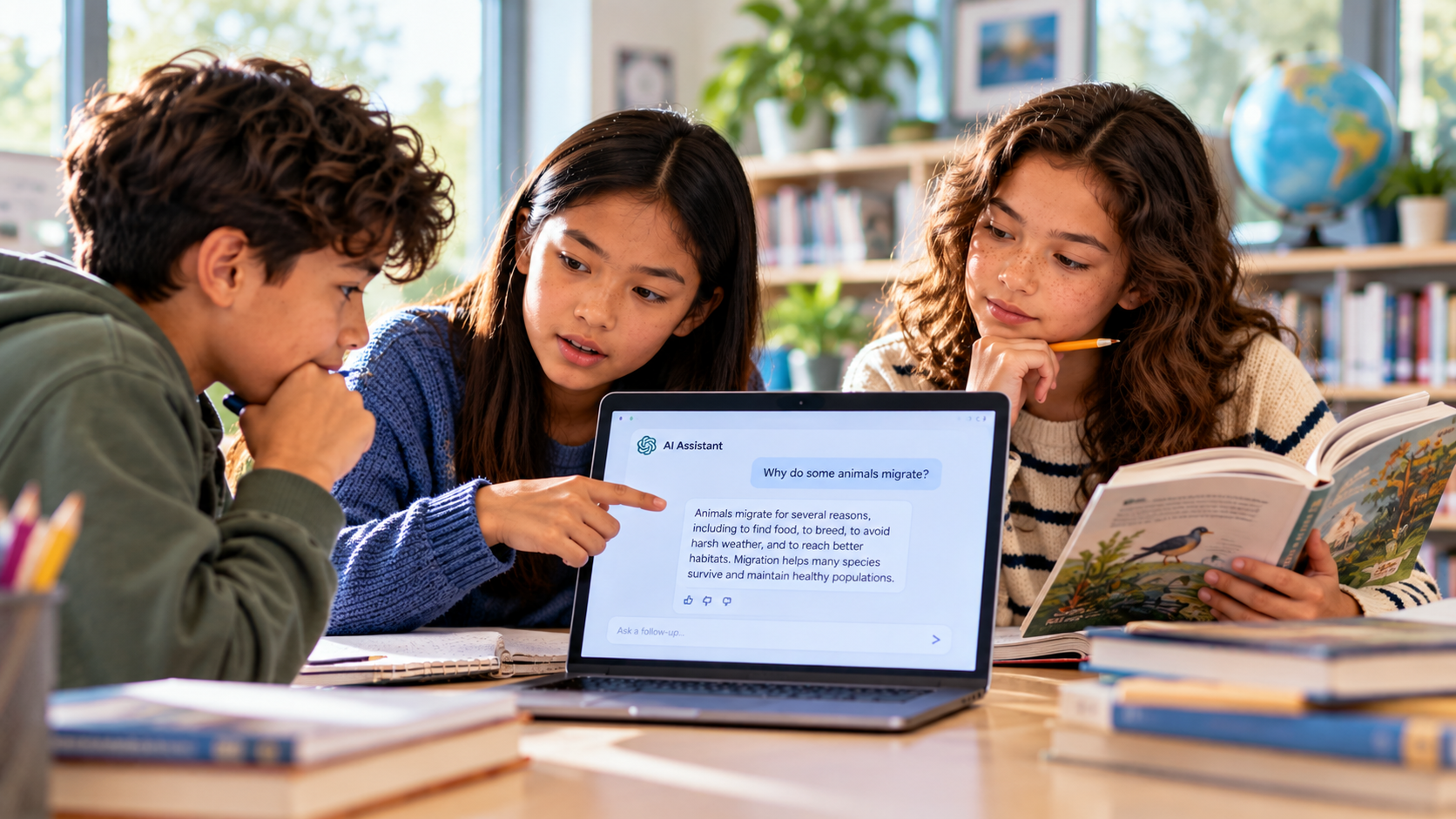
Today, students can ask a chatbot to explain photosynthesis, write their book report instantly, make silly pictures of their pet, or give them an answer that sounds confident and yet is completely made up. So, what are teachers supposed to do with that?
Is the answer to hand them another 47-page framework with little relevance to real-life scenarios they are already encountering? Probably not.
The more practical answer is to teach students how to think about AI.

AI Literacy Builds On Skills Students Are Already Learning
Schools have spent years teaching good digital citizenship: think before you click, share, post, or trust what appears on a screen.
Many of these same habits apply to AI. Students are already being guided to consider:
- Is this source trustworthy?
- Who created it?
- Why was it created?
- What information should I share?
- How should I treat other people online?
AI adds a few new questions to the mix:
- Could this answer be wrong?
- How would I verify it?
- Is this my work?
- What information am I giving to the AI?
- When should I use AI, and when should I do the thinking myself?
Those are not just technology questions. They are questions about judgement.
That’s good news because teachers don’t have to become experts on AI to help students build AI literacy. They can build on skills they already teach, like evaluating information, recognizing bias, considering perspectives, protecting personal information, and giving credit for someone else’s work.
ISTE’s practical guide to AI literacy and digital citizenship offers examples of how educators can introduce these ideas through everyday classroom activities.
So, What Does AI Literacy Look Like In The Classroom?
Start with a question students are already asking:
What role should AI play in schoolwork? Should it be banned, encouraged, or somewhere in the middle?
A teacher could start with an article that explores the question from different perspectives.
Some educators see AI as a helpful tool for individualized learning, brainstorming ideas, explaining concepts, or supplemental instruction. Others have concerns about accuracy, academic honesty, and students relying too much on AI before they have developed foundational skills.
Then the class can compare that material with an AI-generated response to the same question.
Now students have something to investigate.
- Is the answer accurate? Can they find reliable evidence to support its claim?
- Is it biased? Does it favor one side? What might it have left out?
- Where did the information come from? Can the student verify the source?
- What about privacy? If students are using an AI tool themselves, what information should they keep private? The Federal Trade Commission’s guidance on the Children’s Online Privacy Protection Act (COPPA) explains protections for young children’s personal information online.
The point of this activity isn’t about catching AI making mistakes but about building a habit of not accepting an answer just because it sounds authoritative.
AI Literacy Requires Content Students Can Question And Trust
If we want students to develop effective AI literacy and digital citizenship skills, they need more than examples of how AI works. They need opportunities to read, question, compare, research, and discuss real topics.
That creates an important challenge for the organizations building curriculum and learning products; they need \accurate, age-appropriate content that educators can trust and engaging enough to make students want to dig in and think.
Turning Trusted Content into Practical AI Literacy for Students
Cricket Media’s Digital Asset Library is one example. It gives curriculum developers, publishers, EdTech companies, and other education partners access to a searchable collection of K–8 stories, articles, illustrations, and educational content available for licensing and integration into learning products.
That means less time hunting for individual sources, checking age-suitability, and clearing rights and permissions one item at a time.
Trusted content can help turn AI literacy from an abstract concept into practical skills students can apply.
An article about bias in technology can become a lesson about evaluating information and perspective.
A story about AI and schoolwork can spark a discussion about academic honesty.
An article about AI-generated art can open a conversation about creativity and authorship.
A story about privacy can help students think about what they share with online tools.
AI may be able to produce an answer in seconds.
The more important skill is teaching students what to do next: question it, verify it, compare it, and decide whether it deserves their trust.
For curriculum and learning-product teams, that starts with giving students high-quality content worth questioning in the first place.
See How Cricket Media Content Can Support Your AI-Powered Learning Products.
Explore Cricket Media’s Digital Asset Library to see how trusted, rights-cleared K–8 content can support AI literacy, digital citizenship, and critical-thinking experiences
Schedule a demo to check out Cricket’s Licensing Library ⬇️