Across households, parents are rediscovering the value of analog childhood through reading together, flipping through pages, and building routines that feel quieter and more intentional.
In a world where screens are everywhere, more families are looking for ways to slow childhood down. Not to eliminate technology, but to rebalance it.
A Cultural Shift Toward Simplicity
A growing number of families are embracing what some have called “low-tech parenting,” a shift toward more intentional, less overstimulating childhood experiences. You can see this reflected in the rise of <a href=”https://www.thefp.com/p/the-rise-of-low-tech-parenting”>low-tech parenting</a>, where parents are not rejecting modern life, but becoming more selective about how their children engage with it.
That mindset is showing up in unexpected places. Even analog-style “landline phone” designed for kids are gaining traction. These devices do less, not more, and that is exactly the point.
At the same time, nostalgia is playing a meaningful role. Many Millennial and Gen Z parents are bringing back the experiences they grew up with. Magazines. Books. Storytime. As explored in this look at nostalgic purchases for Gen Alpha, these choices are not just sentimental. They are intentional.
Why Analog Childhood Still Matters for Kids
Children learn differently when they are interacting with something physical.
Reading a printed page invites a different kind of participation: turning pages, pointing to pictures, asking questions, going back to a favorite story. These moments may feel small, but they are foundational.
Research continues to support this. Studies like those published through this review on early learning and reading show that shared reading experiences support early language development, attention, and parent-child connection in ways that passive consumption does not.
Print also creates a kind of focus that is increasingly rare. There are no notifications. No competing inputs. Just a story, unfolding at a pace a child can follow.
A Balanced Approach to Screens
It is important to be clear. Not all screen time is bad.
Some digital experiences designed specifically for kids are thoughtful, high-quality, age appropriate and genuinely useful. At Sensical, for example, content is curated by age and developmental stage to provide a safer, more appropriate viewing experience.
The goal is not elimination. It is balance.
For many families, analog experiences have become the foundation, while digital plays a supporting role. One does not replace the other. They simply serve different purposes.
If you are thinking about how to create that balance at home, our post The Amazing Benefits of Reading Aloud to Kids offers a helpful look at why shared reading remains so valuable.

The Unique Role of Print and Magazines
Print offers something that feels increasingly valuable. It is tactile, focused, and shared.
A magazine does not compete for attention. It invites it.
It also creates small rituals that children come to expect. A new issue arriving. A story read before bed. A quiet moment in the middle of the day. These are not just habits. They are experiences children carry with them.
If you are building a reading routine, 8 Tips for Raising a Lifelong Reader offers practical ways to make those moments consistent and enjoyable.
A Reading Experience That Grows With Your Child
For many parents, Cricket magazines are not new.
They remember them. They remember opening an issue and getting lost in a story. Discovering something unexpected. Feeling like the content was made just for them. That experience stayed with them.
Now, they are sharing it with their own children.
That is part of what makes print feel newly powerful right now. It is not just about learning outcomes or reducing screen time. It is about continuity. Passing something meaningful from one generation to the next.
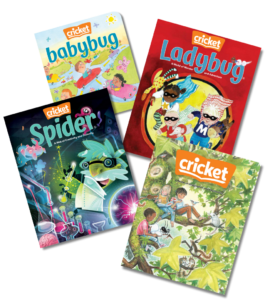
Cricket Media’s magazines are designed to meet children where they are and grow with them over time. From early lap reading to independent exploration, each stage builds on the last. If you are deciding where to begin, Cricket Media can help you choose the right magazine for your child’s age and stage.
Final Thought
The future of childhood is not analog or digital. It is both. But the return of analog childhood reminds us that kids still need space for focus, imagination, and shared connection. But in a world where screens are the default, analog experiences offer something increasingly valuable. Focus. Connection. Imagination.
Sometimes, the simplest moments, a story, a page, a shared laugh, are the ones that matter most.
And those are the moments worth holding onto.
Bring Analog Childhood Back Home
If your family is looking for more screen-balanced moments, Cricket Media magazines offer a simple place to start.
Across every age and stage, our magazines give kids stories, poems, art, activities, and ideas they can hold in their hands, revisit at their own pace, and share with the people around them.