
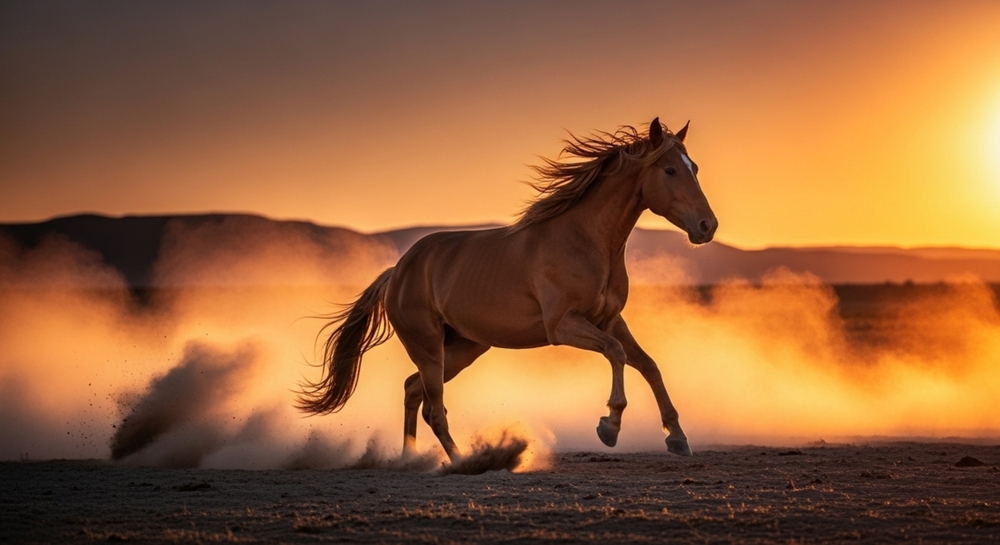
Happy Lunar New Year! This time around, it’s the Year of the Horse! We’ve previously shared some of our favorite snake facts for the Year of the Snake and dragon facts for the Year of the Dragon, and now it’s time for some incredible fun facts about horses.
Horses have lived and worked alongside humans for thousands of years. They’ve been our constant companions in war and peace as well as prominent figures in myth and legend in cultures around the world. What makes horses so special? Here are just a few intriguing tidbits from our award-winning children’s magazines.

Horses Through History
- Humans, specifically Central Asian nomads, first domesticated horses around 5,500 years ago.
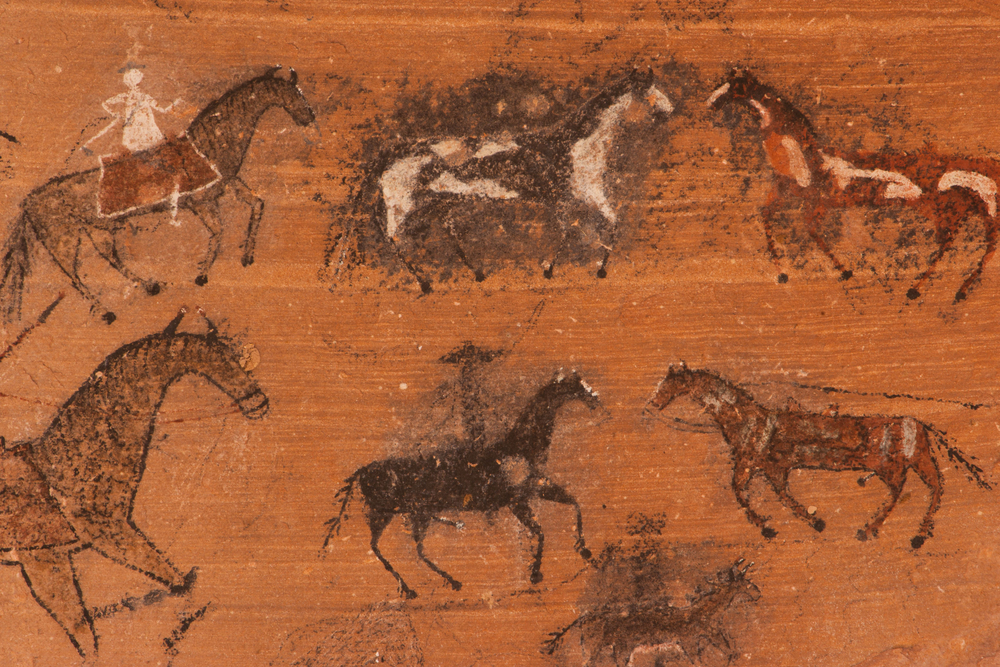
- Even before horses were domesticated, early humans showed a fascination with their beauty and power. They’re subjects of some of the world’s oldest cave paintings, including some created in France and Spain as long ago as 12,000 to 32,000 years.
- Horse racing is one of the oldest sports in the world, as old as 4,500 BCE. Later, horse-drawn chariot racing became an extremely popular pastime in ancient Greece and Rome. It was even an event in the ancient Olympics! The most famous chariot racer of all time was a Roman man named Scorpus. He won 2,000 chariot races before dying in a race at the age of 27. Chariot racing was a massively dangerous sport!
- After horses were introduced to North America (or rather re-introduced, as they previously lived here during the Ice Age), Indigenous American people used horses to hunt bison and carry heavy packs, aiding in a more nomadic lifestyle. The Lakota people called them Šúŋkawakȟáŋ, which means “sacred dogs.” By the 19th century, many Native American groups became legendary for their horsemanship.
Many Kinds of Horses
- Believe it or not, there is only one subspecies of domesticated horse, Equus ferus caballus. But within that one subspecies, there are around 400 different breeds!
- Domesticated horses consist of five main categories: draft, warmblood, light, gaited, and pony.
- Horses can breed with other closely related species. You may have heard of a mule, which is half-horse, half-donkey. But did you know that a horse can also breed with a zebra? Their offspring is called a zorse!
- There is only one true wild horse, called the Przewalski’s horse, which is native to Mongolia but became extinct in the wild for over 30 years. The horses only lived in zoos and wildlife preserves until reintroduction efforts brought them back to their original territory, albeit in small numbers.
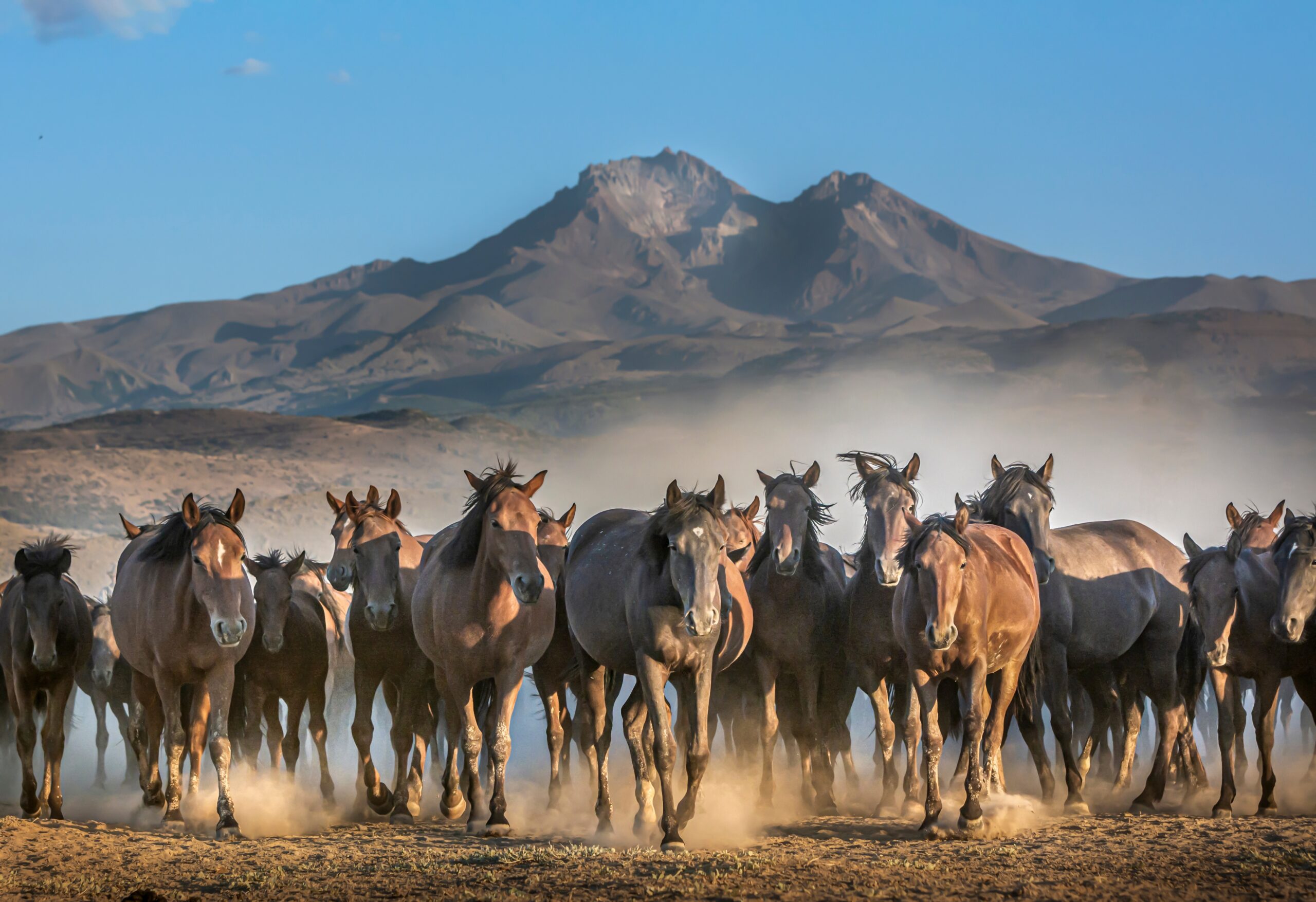
- The “wild horses” you may see in North America and Europe are more accurately feral domesticated horses. Some of the most famous “wild horses,” wild mustangs, were brought to the Americas by Spanish conquistadors as early as the 1490s. As many as 2 million mustangs lived in the USA by the middle of the 19th century, and there are around 88,000 today.
Horse Bodies
- A typical horse can produce around 50 pounds of feces and urine per day. Fortunately, all that waste can serve an important purpose: fertilizer for crops!
- Horses graze constantly because their digestive system is not efficient– around 100 feet in length and taking up to 72 hours to process food. Horses are also biologically unable to throw up, so it is important not to feed them things that might make them sick. They do best with fiber-rich foods like grass and hay as well as oats and barley. Some of their favorite treats include apples and carrots!
- Horses can sleep standing up, but they lock their legs to keep from falling over. Contrary to popular belief, though horses can lie down to sleep, and do to get some truly deep shut-eye, so if you see a horse lying down, it doesn’t mean anything’s wrong with it. Still, horses don’t need deep sleep as much as you and I do.
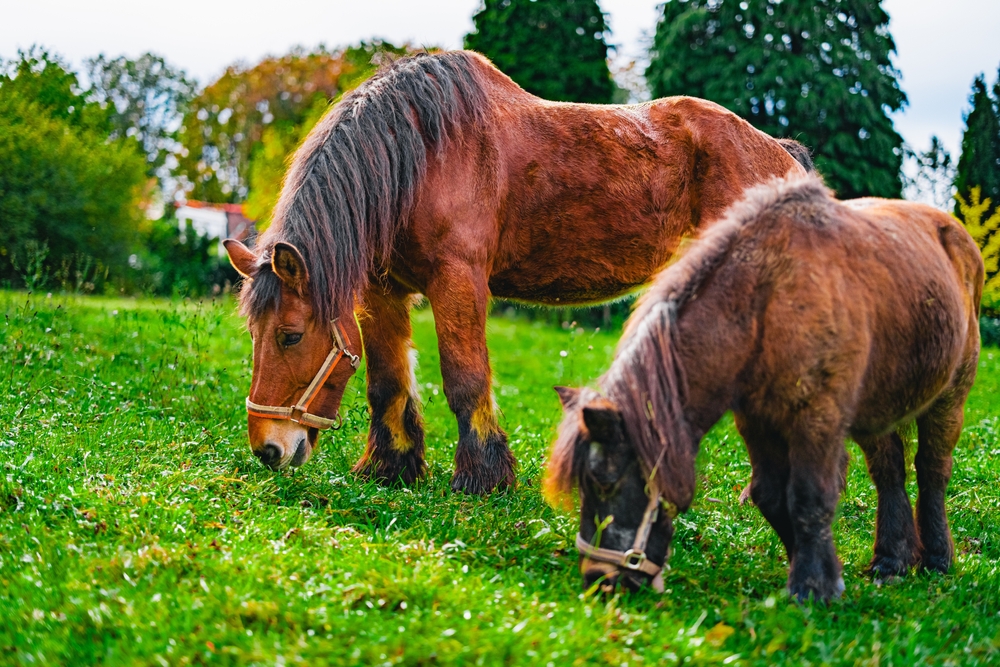
- Horses vary tremendously in size. The biggest horses are draft breeds, like Belgian and Shire horses, which can be up to 6.5 feet tall and weigh in at over 2,000 pounds. The smallest breed of miniature horses is the Falabella, which stands only about 28-34 inches at the shoulder and weighs up to around 200 pounds. But the smallest horse ever recorded, appropriately named Thumbelina, was born with a form of dwarfism, causing her to be only 17 inches tall and a petite 57 pounds!
Horses in Myth and Legend
- Did you know that there are two (and a half) horses in the stars? See if you can spot the constellations Equuleus (the little horse) and Pegasus (the winged horse) in the night sky. Oh yes, and that half? That’s Centaurus, the centaur. Centaurs, half-human and half-horse beings, featured prominently in Greek mythology.
- Pegasus isn’t the only flying horse in mythology. The Chollima is a winged horse from Chinese legend that is said to be too fast and too delicate for anyone to ride it. Hindu mythology features the
Uchchaihshravas, which doesn’t only fly– it also has seven heads! In Norse mythology, there’s eight-legged Sleipnir, who travels so fast that he doesn’t even need wings.
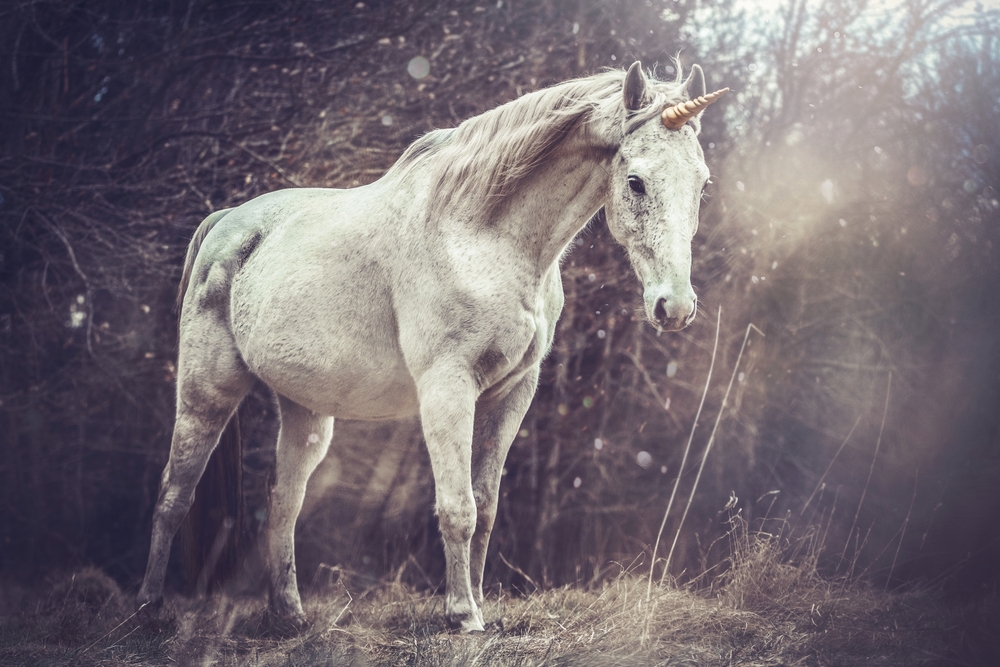
- Since ancient times, tales have been told of the unicorn, a mysterious white horse with a single horn spiraling from its forehead. During the Medieval era in Europe, unicorns represented purity and innocence. Their horns were believed to have healing properties. You can even see a unicorn on the official coat of arms of the United Kingdom– it’s the national animal of Scotland!
- Speaking of Scotland, another legendary creature in Scotland is the kelpie, a shape-shifting horselike spirit that lives in lochs and rivers and lures people to their watery graves. Yikes!
Learn Your Horse Vocabulary!
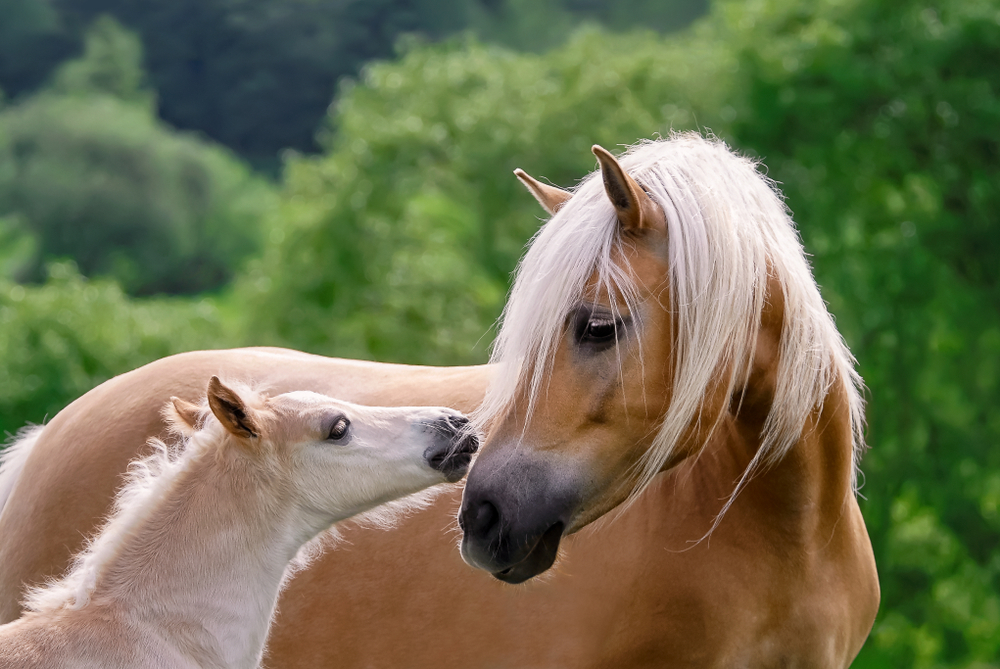
- Newborn horses are called foals until they are one year old. Until the age of three or four, they are then known as “colts” (males) or “fillies” (female). An adult male horse is called a “stallion” (or a “gelding” if he’s neutered) and an adult female horse is called a “mare.”
- Horses are measured in “hands,” which is a span of about 4 inches. A horse’s height in hands is measured at the “wither,” or shoulder, not the top of the head. Most horses are 14-17 hands tall.
- When riding a horse, what’s the difference between a trot, a canter, and a gallop? It’s in the beats– that is, the movement of each leg. A trot is a diagonal two-beat gait, a canter is a three-beat gait, and a gallop is a four-beat gait. So when trotting, the horse uses two pairs of legs at once. A canter moves one pair of legs together and the other two legs separately. And a galloping horse moves each leg independently!
Want to learn more? Enjoy a gift of reading that lasts all year long with our kids magazines!