
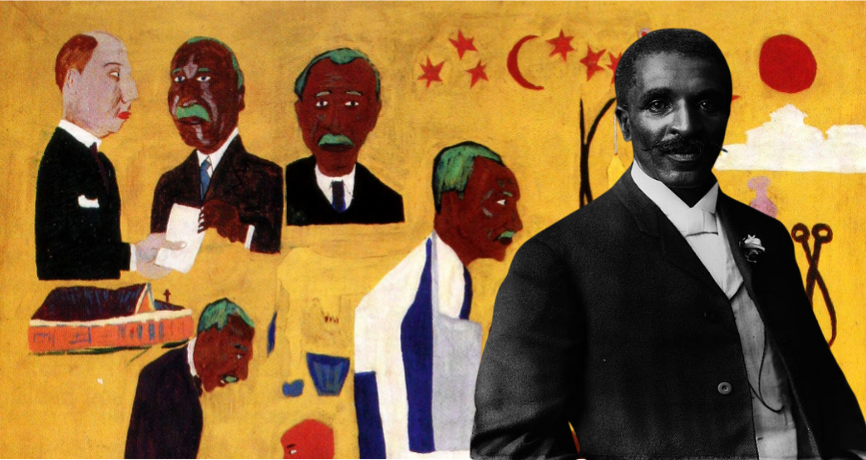
Most Americans know just one fact about George Washington Carver: he invented peanut butter. But what if we told you that fact isn’t quite true– and that he invented so much more? In fact, Carver changed the way we live, eat, and grow crops in this country. In honor of Black History Month, here are just a few of our favorite facts about this iconic innovator, courtesy of CRICKET Magazine and SPIDER Magazine.

George Washington Carver was born into slavery and had a scary, unstable start in life.
George Washington Carver’s exact date of birth is unknown because he was born to enslaved parents. He was probably born around 1864 in Diamond Grove, Missouri, but nobody knows for sure. He couldn’t even take his parents’ word for it because he grew up without any. His father died in a horrifying log-rolling accident before George was even born, and he was separated from his mother when he was only weeks old.
As an infant, George and his mother were both kidnapped by a band of people known as ‘slave raiders.’ They made their money through the horrifying practice of kidnapping people and selling them into slavery. While George’s family’s enslavers found him and brought him back to Missouri, they couldn’t find a trace of his mother. He never saw her again.
From the very beginning, George Washington Carver broke academic barriers.
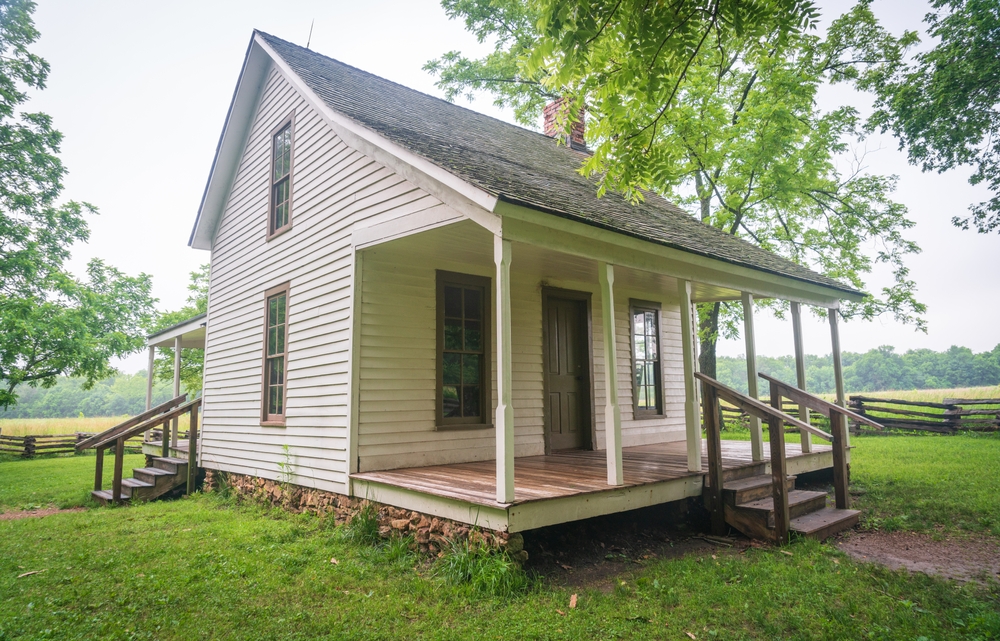
When slavery was abolished, George had nowhere to go. His former enslavers, Moses and Susan Carver, raised him, though that doesn’t mean they really treated him like their “own” child. Although Black children weren’t allowed to attend local schools, George showed strong academic gifts from an early age. He was fascinated by plants and herbs and even had a lifelong knack for drawing and painting.
Eager for a real education, George left the Carvers’ home somewhere around age 10 to 12 to attend a segregated school. His time there was short as he quickly surpassed even his teachers in academic knowledge. He eventually graduated from high school in nearby Kansas. Still, even when he was accepted to a college in Kansas, they wouldn’t actually let him attend class there because of his race.
He later traveled to Iowa, where he began studying at Simpson College. His art teacher there saw his potential and recommended he transfer to Iowa State Agricultural College to pursue a degree in botany. George was the first Black student to attend the college– and the first to graduate with a Bachelor’s degree, the first to graduate with a Master’s degree, and the first Black faculty member there. What a trailblazer!
George Washington Carver didn’t actually call himself “George Washington Carver.”
He simply went by “George Carver” as a young man. He began using the name “George W. Carver” while living in Kansas after constant confusion with another local George Carver. Throughout the rest of his life, though, he only signed his name as “George W. Carver.” Where, then, did the Washington come from?
As the legend goes, a reporter asked him if the W. stood for “Washington,” to which he replied, “Why not?” The name stuck– though the question remains as to whether the W. actually stood for the phrase “Why not?” George Washington Carver also wasn’t the only name others called him. Even as a young child, locals referred to him as “The Plant Doctor” for his knack with plants, and later in life, he was given the name, “The Peanut Man.” You’ll see why soon!

He spent almost his entire adult life working at the Tuskegee Institute.
Shortly after he received his Master’s from Iowa State, Booker T. Washington invited Carver to join the faculty of his prestigious Tuskegee Institute in Alabama. In fact, he was creating a whole new School of Agriculture just for Carver to lead. He held to a strict policy of a Black-only faculty at Tuskegee and, as Carver was the first Black student to earn a Master’s degree in agricultural science, he was a perfect fit. Carver stayed on the Tuskegee faculty for the rest of his life, refusing all other offers. While there, he revolutionized the field of agricultural science and changed the way Southern Americans– and especially Black Americans– farmed.
Why did George Washington Carver work with peanuts? To help heal depleted soil.
After the Civil War, most Black farmers survived as sharecroppers. That means they worked a portion of white-earned land and brought home a “share” of “crops,” keeping them in poverty. Carver wanted to create new opportunities for Black Americans to become prosperous, innovative farmers. His biggest obstacle? The land itself.
After years of nonstop cotton farming on a massive scale, the soil was weak in nutrients. Even worse, infestations of a pest called boll weevils destroyed cotton crops, causing many Southern farms to fail. Carver recommended a practice of rotating crops like peanuts, sweet potatoes, and beans to keep the soil full of nutrients. Peanuts are a great source of nitrogen, which is extremely nutritious for the soil. Now, he just needed to prove to people that peanuts were good for them, too.
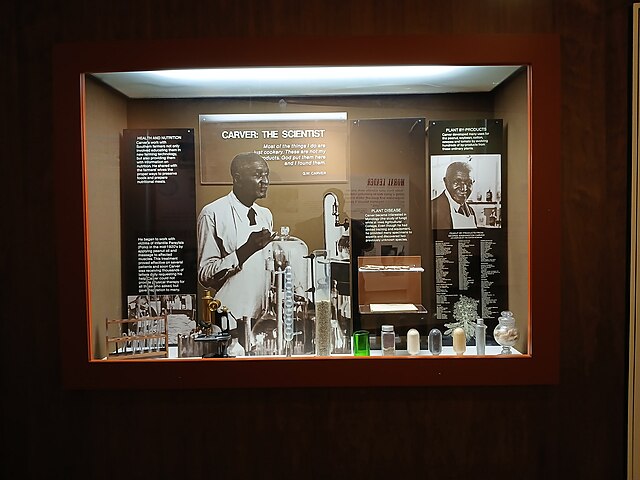
George Washington Carver created over 300 uses for peanuts and over 100 uses for sweet potatoes.
If he was to change the southern farming landscape from chiefly producing cotton as a cash crop, he needed to come up with good reasons to grow peanuts and sweet potatoes, too. His trademark ingenuity led him to some amazing discoveries. Here are just a few of the uses for peanuts that he promoted: flour, ice cream, glue, insulation, paper, cooking oils, soap, shaving cream, Worcestershire sauce, medicine, skin lotion, and even a meat substitute! (We’d try it.) True, not all of these caught on, but they opened the door for the peanut farming industry.
As for his sweet potato solutions, they included using sweet potatoes in sweetener (makes sense!), flour, vinegar, ink, and even postage stamp glue! In a bulletin he published for farmers, called How the Farmer Can Save His Sweet Potatoes and Ways of Preparing Them for the Table, he even shared some tasty sweet potato recipes, including sweet potato pie and doughnuts. We might have to try those!
George Washington Carver didn’t invent peanut butter– but he helped popularize it!
If you love peanut butter and jelly sandwiches, you can thank George Washington Carver for helping to make them a lunchbox staple. That doesn’t exactly mean he invented peanut butter, though. The ancient Aztec and Maya peoples were the first to create a paste from peanuts.
Dr. John Kellogg (yes, the cereal man) was the first to patent something like peanut butter in America. His peanut paste was designed as a nutritious food for sick patients who couldn’t chew, and it used steamed rather than roasted peanuts. It wasn’t quite as tasty as the peanut butter we eat today! Peanut butter became mass-produced in the early 20th century.
You can easily argue, though, that peanuts simply wouldn’t be grown in large enough quantities for peanut butter to be a viable option without the influence of George Washington Carver. In addition, in his 1916 pamphlet “How to Grow the Peanut and 105 Ways of Preparing it For Human Consumption,” he included recipes for peanut butter as well as peanut butter sandwiches!
He brought a mobile classroom called a Jesup Wagon directly to farmers.
It wasn’t always easy to bring farmers into a classroom to learn about agricultural science. That’s why Carver created a classroom on wheels called the “Jesup Wagon,” which he took to farming communities around Alabama. The wagon started as a horse-drawn carriage and, as technology advanced, was replaced by early automobiles. Why was it named a “Jesup” Wagon and not a Carver Wagon? Though Carver created and designed the wagon, it was funded by a banker named Morris K. Jessup– who even purchased the mules that originally pulled it. The wagon came fully stocked for demonstrations with supplies like seeds, fertilizers, and even new farming technology like a revolving churn and cream separator.
George Washington Carver never married or had children, but he made many famous friends.
A lifelong bachelor, Carver nonetheless was rarely lonely. In fact, he easily made friends in high places due to his expertise and generosity. He became a valued advisor to three U.S. Presidents– both Roosevelts and Calvin Coolidge– and he referred to Mahatma Gandhi as his “beloved friend.” In fact, he helped give the famously vegetarian Gandhi nutrition advice. Carver rubbed elbows with other well-known inventors, including Thomas Edison and Henry Ford, with whom he corresponded and collaborated for the last two decades of his life. Heads of state from around the world were interested in learning from Carver, too. The Crown Prince of Sweden studied with him for three weeks, and even the infamous Josef Stalin asked him to come visit the Soviet Union. Carver refused.
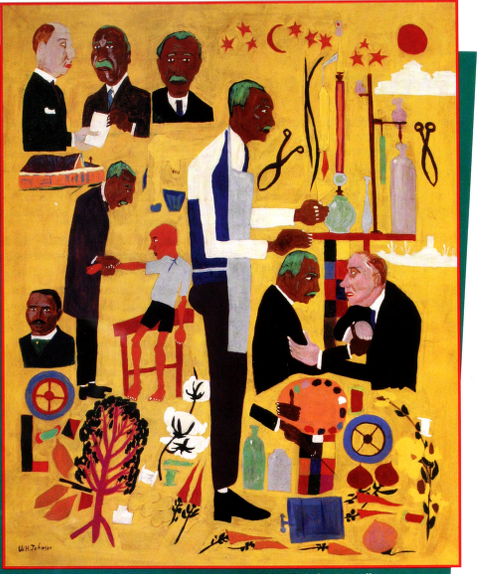
George Washington Carver donated his entire fortune to the Tuskegee Institute and left an amazing legacy.
Although Carver was a sickly child and didn’t think he’d make it to his 21st birthday, he lived well into his 70s. He passed away in his home on January 5, 1943 at the age of 78. He’d been suffering from pernicious anemia and later suffered a bad fall on the stairs, from which he never recovered. Having spent most of his life dedicated to the Tuskegee Institute, he remained just as devoted in his final bequest. He left his entire savings of $60,000 to the Institute, establishing a museum and a foundation in his name.
He was buried on the grounds of the institute next to Booker T. Washington himself. His beautifully worded epitaph reads, “He could have added fortune to fame, but caring for neither, he found happiness and honor in being helpful to the world.”
As a truly great American innovator, George Washington Carver’s legacy is honored in many ways. President Harry S. Truman designated January 5 as George Washington Carver Day. His face has appeared on postage stamps and half-dollar coins, and you can visit the George Washington Carver National Monument near his birthplace in Missouri. The legacy he might be most excited to learn about? A lifelong expert in fungal crop diseases, several species of fungus have been named after him. Still, despite all of these honors, his impact on the way we live, farm, and eat is beyond measure!
Celebrate Black History Month With These Past Blog Posts!
9 Things You Didn’t Know About Rosa Parks
13 Things You Didn’t Know About Frederick Douglass
12 Facts You Didn’t Know About Ida B. Wells
12 Facts You Didn’t Know About Harriet Tubman
10 Things That You May Not Know About Martin Luther King, Jr.