
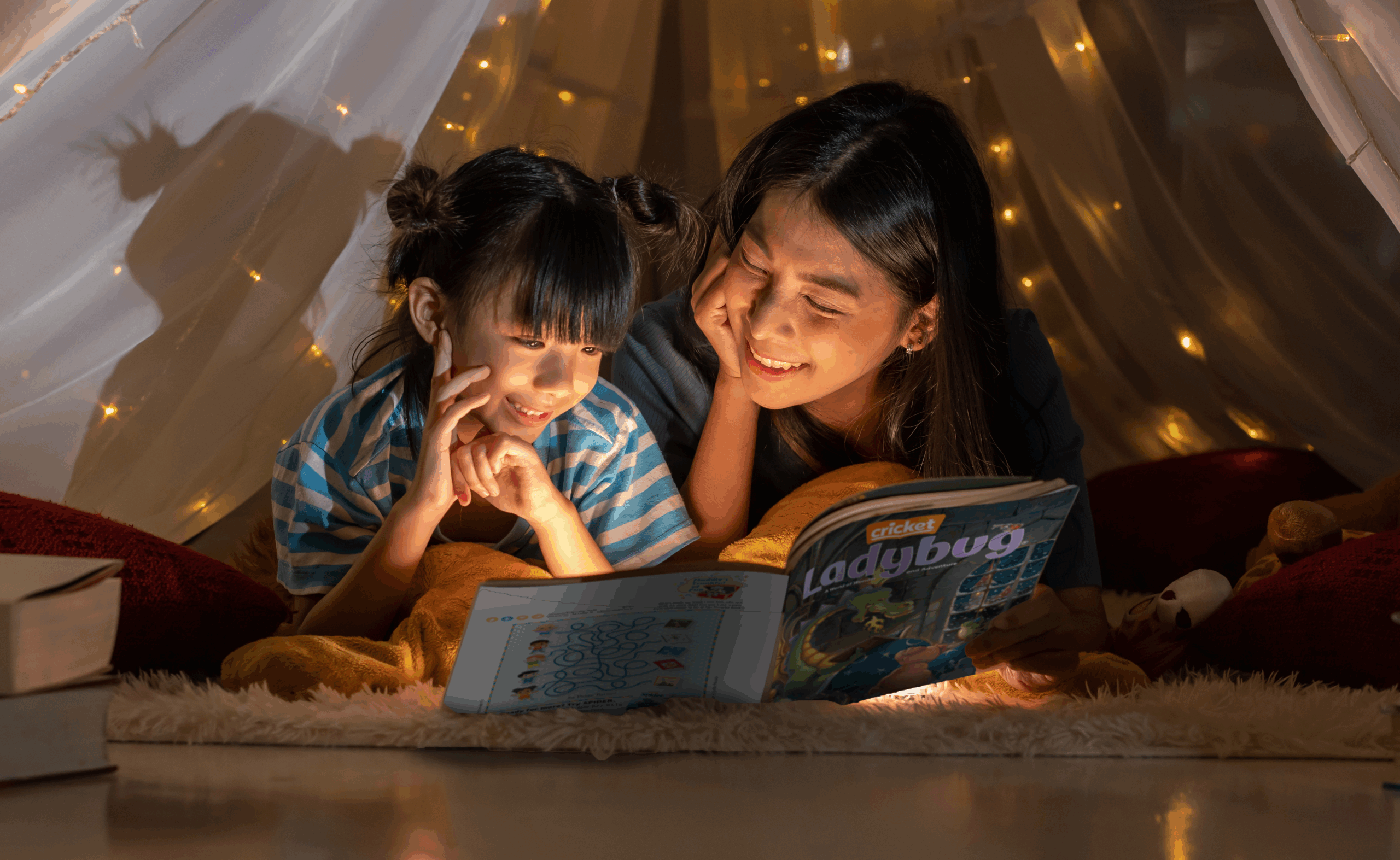
March is National Reading Month, but we’re here to inspire your family to read all year long! There’s no time like the present to take steps toward raising kids who love to read– and who grow up into lifelong readers!
The truth is, that’s easier said than done. The number of kids who love to read is in decline across the country. In 2023, the percentage of kids who said they love to read for pleasure “almost every day” dropped to 14% from 27% in just 11 years. And adults aren’t much better– only about 16% report reading for pleasure “almost every day.” Adult reading habits start early.
But don’t despair! We’ve been in the business of publishing award-winning magazines that have inspired and delighted children for over 50 years. We know all about building a lasting love of reading in kids of all ages. Here are just a few of our top tips for parents and guardians who want to raise readers.

Independent reading begins with reading aloud.
It’s no secret that reading aloud to kids is great for their brains. It helps them develop valuable skills in literacy, pattern recognition, and even social-emotional abilities at an earlier rate than their peers. But reading aloud to your kids also helps them associate reading with part of daily life from an early age. Kids who love being read to will continue to reach for books as they become independent readers. And making time for a daily bedtime story helps them recognize reading as a key part of their everyday routine. Learn even more about the benefits of reading aloud to kids!

Build a reading routine.
As your child grows into an independent reader, look for ways you can make reading part of your schedule. If your kids have outgrown bedtime stories, reserve 15 minutes for independent silent reading before bed instead. Make a weekly family trip to the library to choose new reading material. Keep books in every room of the house and on commonly-accessed surfaces like the dining table, coffee table, and your child’s bedside table to encourage them to reach for a read. Magazine subscriptions and book subscription boxes are another excellent way to encourage regular reading habits!
Explore a variety of content.
Maybe your child doesn’t feel drawn to novels. There’s nothing wrong with that. In fact, there’s a whole wide world of reading possibilities outside the novel. Let your child’s interests guide you to choose reading material. Experiment with:
- Nonfiction books about their interests– like favorite animals, natural disasters, outer space, etc.
- Biographies of their favorite athletes, singers, or actors
- Graphic novels and comics
- Craft books, cookbooks, and other “how to” guides
- Short stories
- Poetry
- Plays and screenplays
Or maybe they do enjoy novels, but it’s a matter of genre. Explore a wide variety of genres and see what appeals to your child:
- Science fiction
- Fantasy
- Mystery
- Historical fiction
- Realistic fiction
- Humor
- Folktales and fairy tales
This is one reason to recommend magazines for growing readers. We publish four award-winning magazines for kids ranging between ages 0-14: BABYBUG, LADYBUG, SPIDER, and CRICKET. Each includes a wide variety of short fiction and nonfiction content, as well as puzzles, crafts, and other activities. There’s something there for every kid to help them find where their reading interests lie, whether they’re fascinated by dinosaurs or fantasize about training dragons. Think of it as a snack plate: regularly sampling different kinds of reading will inspire kids to choose more variety of books.

Make time for book talk.
How to keep reading at the forefront of your kids’ minds? Talk about it! Make a conscious effort to ask them what they’re reading at the dinner table, on the driver to soccer practice, wherever. These conversations are a great opportunity for encouraging critical thinking. As they share their latest reading adventures, keep handy questions like this up your sleeve:
- “What do you think will happen next?”
- “Have you ever felt like that before?”
- “Does this story remind you of any others you’ve read before?”
- “Why do you think [character] did that?”
- “What would you do if you were [character]?”
Enjoy reading on the go.
There’s no way around it: our lives are busier than ever these days. If you feel like your family is always on the go and never at home, that doesn’t mean reading has to stop. Try audiobooks for those long family drives. You might think listening to audiobooks doesn’t really count as reading, but it actually does use the same language processing centers in a child’s brain as reading a book. It also keeps kids thinking about books and excited to hop in the car to hear the next chapter or two. Practices like this help build lifelong readers, as “road trip audiobooks” become ingrained habits long into adulthood. For short drives where motion sickness isn’t a concern, always pack a book or a magazine along for the ride!

Try some technology.
Another way to encourage reading on the go or daily reading habits? Through responsible use of tech. Parents may be wary about giving kids unrestricted access to phones or tablets, and for good reason. But carefully chosen reading-focused apps and games can help give kids daily reading practice to help them become readers for life. We recommend Reading Stars, a safe, fun reading app that helps kids grow as learners with just 10 minutes of practice per day. Expert CRICKET editors have carefully selected thousands of mini ebooks to fit every child’s reading level, paired with interactive games, quizzes, and activities. Turning reading into a game helps reading habits stick!
Model good reading habits.
We don’t want to scare you, but possibly the best way to raise a reader is to BE a reader. If you express a love of reading and excitement to read new books or magazine issues, your child will internalize that reading isn’t homework. It’s cool, fun, and part of adult life. When your family is sitting around the living room together, resist the urge to check your phone for a few minutes and pick up a book, magazine, or an e-reader to enjoy reading time alongside your kids.
Also, talking about books goes two ways. Don’t just ask your child about what they’re reading, but tell them a little about your current reading, too. Maybe don’t go TOO in-depth if it’s not exactly kid-friendly, but share hints about how the book makes you feel: “I can’t wait to get back to my book tonight. The last chapter ended with a big cliffhanger. I need to know what happens!”
Add reading material to your gift shopping lists.
Start a new family tradition: every birthday or gift-giving holiday comes with new reading material. Some families practice giving “Something you want, something you need, something to wear, something to read.” While you don’t have to stick that strictly to it, making books part of your gift-giving traditions helps build those lifelong reading habits. Encourage your kids to make lists of books they want to read or topics they want to read more about as you get closer to the holidays to ensure they’ll get something they’re excited about. Magazine subscriptions make fantastic gifts, too! It’s a gift of reading that keeps on giving all year long.
Want to stay in the loop with more tips for raising smart, curious, creative kids? Sign up for our free CHIRP newsletter and get fun family activities, advice for parents, and special offers on our products every month. Happy reading!