
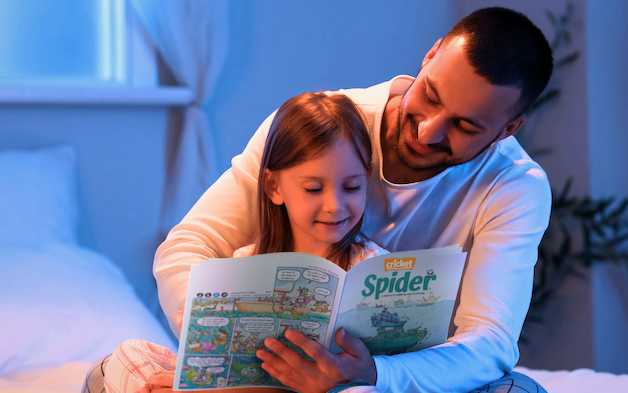
There’s no time like story time! In fact, there’s something universal about gathering around and listening to a story. From prehistoric people telling stories around a fire to circle time in your child’s preschool class, telling stories is part of being human. Science has proven that it isn’t just fun and comforting, it’s good for our brains! Here are a few reasons to recommend reading books or magazines to your kids– of all ages!
Earlier Language Skills
According to the American Academy of Pediatrics, research shows that children who are exposed to reading from an early age have more advanced language skills than their peers when they first begin school. That head start can give kids a big boost in the classroom and beyond. In fact, kids’ literacy skills when they first begin kindergarten can often predict their level of academic achievement for life.
A Stronger Bond
Don’t underestimate the importance of simply spending time together over a good book! It’s a scientifically proven bonding experience. Quality time spent sharing an activity together brings kids and their grownups closer. You might not believe it, but cuddling up together with a good book has specific benefits, too. Childmind.org states that kids’ neurons are actually more stimulated by the physical contact, allowing them to become even more engaged in learning.
Bigger Vocabularies
Books and magazines give kids access to new words that they may not otherwise hear in everyday life. When they hear those words used in a story– especially accompanied by illustrations, and especially spoken out loud by a parent or loved one or teacher– they expand their own vocabularies. Ohio State University predicts that a child who’s read to every day might hear 1.4 million more words by age 5 than kids who are never read to.
Predicting Patterns
Let’s talk about patterns! Kids’ books are filled with them! From rhyme schemes to repetition to cause and effect, kids whose parents read to them will be able to identify and predict elements of stories much more easily. For instance, can you finish this rhyme? “I will not eat them here or there/ I will not eat them _____.” If you said “anywhere,” your parents most likely read to you! Better pattern recognition and prediction skills can help kids with math and science skills, too.
Understanding Emotions
Kids learn to identify and understand feelings from the characters in their books. Being read to amplifies those skills because readers use tone of voice and facial expression to make emotions even clearer. Story time is a great way to engage with kids about their own experiences and feelings. Try asking questions like “Why did Trixie start crying when they left the laundromat in Knuffle Bunny? Oh, because she lost her toy? How do you think she felt? Have you ever felt like Trixie?”
Empathy and Understanding
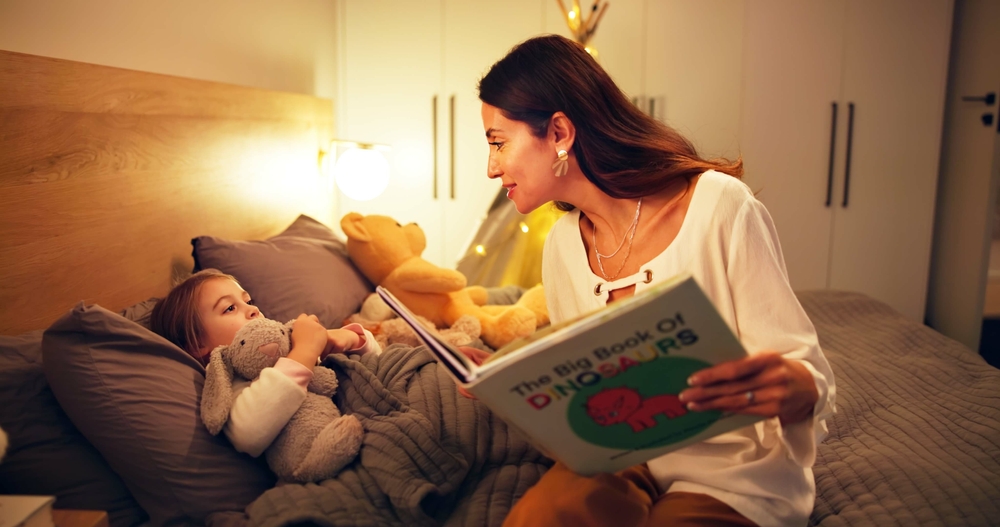
Reading to kids doesn’t just let them better understand their own emotions– it helps them identify with people who are different from them, too. Picture books help kids see things from the perspective of someone else– maybe someone who doesn’t look like them, celebrate the same holidays, live in the same country, or have the same abilities. Reading aloud gives space to ask questions and discuss more in-depth. These are the building blocks of empathy!
Improved Attention and Focus
This one likely doesn’t come as a surprise, but read aloud time is a wonderful, age-appropriate way for kids to build a better attention span. Keeping track of plot, characters, and story details helps kids focus. It’s easier for them to stay absorbed when a real person is reading to them than passively watching a screen. In fact, studies show that kids whose parents regularly read to them before the age of three are less likely to struggle with paying attention once they reach elementary school.
A Lifelong Love of Reading
Early exposure to reading as a family will keep kids interested in books as they get older. Kids who associate books with fun family time won’t just think of reading as schoolwork. Making “read aloud time” a daily activity will encourage kids to make it part of their everyday routines. Letting them choose books for read aloud time is a great way to foster independent reading later on!
… And It’s Not Just For Little Kids!
This might surprise you, but reading aloud to older kids and teens comes with benefits, too! A family story time is a great opportunity to bring the family closer and talk about topics together. Or, consider reading more challenging books like classic novels to your big kids in small chunks, night after night. Sitting back and listening allows them practice their reading comprehension skills, improve their vocabulary, and discuss themes and concepts in the book with you at a reading level that might otherwise intimidate them. They might actually miss bedtime stories and appreciate that time together!
Cricket Media’s award-winning magazines are perfect for reading aloud to kids of all ages. Whether babies, preschoolers, elementary schoolers, tweens, or teens, there’s a magazine for everybody. What’s your favorite title to read aloud?